



According to the provisions in the loan agreement, retained earnings available for dividends are limited to $20,000. However, for other transactions, the impact on is retained earnings a debit or credit retained earnings is the result of an indirect relationship. Below is the balance sheet for Bank of America Corporation (BAC) for the fiscal year ending in 2020.
- The cost of the asset is then spread over the useful lifespan of the assets and accounted for as depreciation.
- Instead, the basic closing step is to access an option in the software to close the reporting period.
- Using earnings you can visualize all additions and subtractions and the total of the resulting net profit.
- Retained earnings are part of shareholder equity (assets minus liabilities), which appear on the company’s balance sheet (the financial statement that lists assets and liabilities).
- On the other hand, though stock dividends do not lead to a cash outflow, the stock payment transfers part of the retained earnings to common stock.
- It’s the residual interest in the assets of the entity after deducting liabilities.
- This means that the value of each account in the income statement is debited from the temporary accounts and then credited as one value to the income summary account.
Likewise, both the management as well as the stockholders would want to utilize surplus net income towards the payment of high-interest debt over dividend payout. Over the same duration, its stock price rose by $84 ($112 – $28) per share. For an analyst, the absolute figure of retained earnings during a particular quarter or year may not provide any meaningful insight. Observing it over a period of time (for example, over five years) only indicates the trend of how much money a company is adding to retained earnings. Management and shareholders may want the company to retain the earnings for several different reasons. The above definitions for the balance sheet elements clarify that retained earnings are equity.
What is retained earnings?
Retained Earnings (RE) are the accumulated portion of a business’s profits that are not distributed as dividends to shareholders but instead are reserved for reinvestment back into the business. Normally, these funds are used for working capital and fixed asset purchases (capital expenditures) or allotted for paying off debt obligations. On one hand, high retained earnings could indicate financial strength since it demonstrates a track record of profitability in previous years. On the other hand, it could be indicative of a company that should consider paying more dividends to its shareholders. This, of course, depends on whether the company has been pursuing profitable growth opportunities. Retained earnings are the cumulative net earnings or profits of a company after accounting for dividend payments.
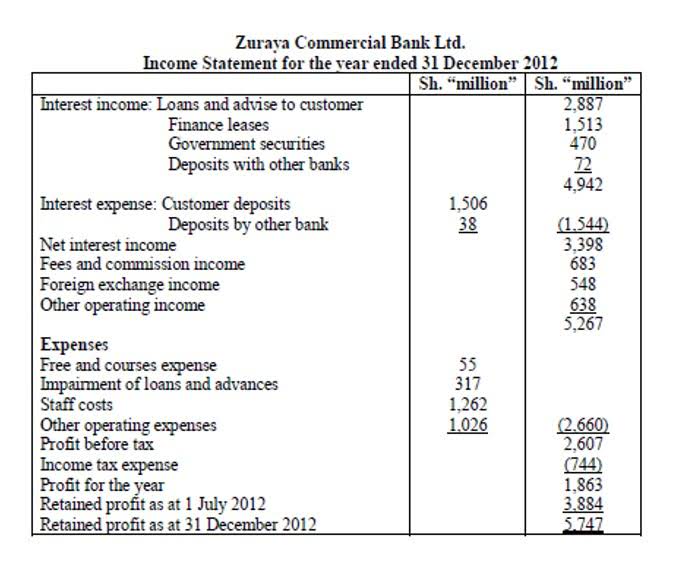
Therefore, retaining earnings is often seen as a positive sign by investors. This situation can arise for several reasons, but the most common is when a company has a net loss in consecutive years. Using earnings you can visualize all additions and subtractions and the total of the resulting net profit. Retained earnings can also be used to pay down debt or increase reserves. Harold Averkamp (CPA, MBA) has worked as a university accounting instructor, accountant, and consultant for more than 25 years.
Example of Closing Entries
Thus, the retained earnings balance does not perfectly portray the level of success or profitability of a company. Instead, if a company’s success is to be analyzed, the various income statement ratios or business valuation methods could be used. They aid in ascertaining the profitability and value of a company respectively.


